| ||||||||||||||||||||||
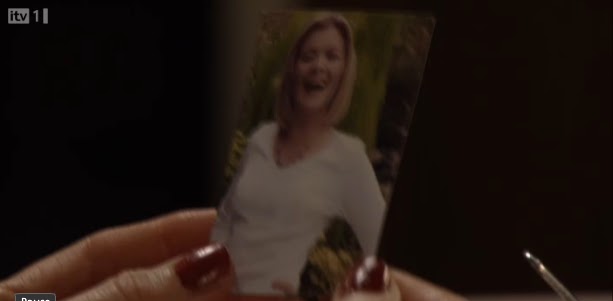
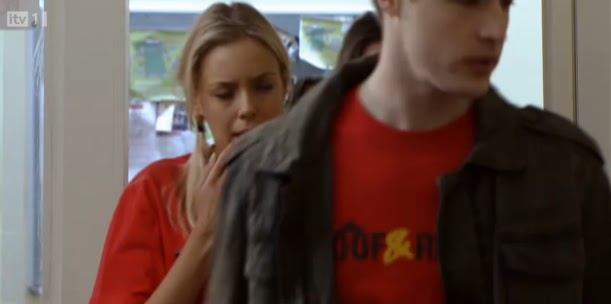
David: Would have preferred to see more of the Stella and Leanne stuff than the 'I didn't do it, waa-waah!' spiel David: Wasted on a mediocre actress. Tom: Ah... there is now ‘no signal’ for ITV1 with my Freeview box... though it has come back on now. The reception was a tad poor in the first episode, frankly... Tom: It’s gone off again! Do you have a link to watch it online? David: http://www.blogger.com/post-edit.g?blogID=7177581073347880981&postID=7086930591731146179#_blank Tom: I'm onto the two infuriating adverts. Has it started again yet for you? EPISODE 2 PART 1 David: Here we go... David: Just about to, you should only miss 30 seconds, if that. David: Straight to Fiz action. David: Can't wait to meet Prisoner Burke. David: Generic hard-man builder (Owen Armstrong). David: Bought his business from Bill Webster (now departed). David: His daughter (Katy, 17?) is pregnant with Chesney's child. Tom: Ah, the sadly departed old Bill... A stout drinking pal of Big Jim Mc., as I do recall. David: Not dead, just fucked off quietly. Tom: So Fiz is an 'exemplary character', is she!? David: Most ironically named baby in soap (Hope)? David: They must be hoping viewers have short memories. David: Who is this "Adam" of which everyone speaks? David: Gail and Sally in the same scene?!!! Tom: "I prefer to call them displaced people..." - who's the pseudo-earnest young lady in the red t-shirt? David: Didn't see this coming! David: Blonde? David: Sophie's bird! David: It's gonna be fine, apparently. Tom: Ah, it was Sophie I meant... It has really been a while since I’ve watched this programme! David: Who's this ‘Joe Bloggs’ of whom everyone speaks?!
Tom: Socialism is alive and well in the personage of Sophie Webster. Tom: Truculent young colt, that David Platt. David: David Platt Sex, ominous. David: Roy: 'A laudable outlook'. Tom: And it's... David Cameron entering, to break the bad news (as ever)...
Tom: Aye, I wouldn’t bet against it... David: They really need to give this (semi)-miscarriage of justice stuff a rest.
David: What are the chances of a hat-trick? Tom: As likely as Jimbo McDonald to pepper his sentences with a random “Catch yersel’ on” or conclude them with “So it is...” David: More Stephen James McDonald after the break I hope. Tom: Aye, I hope Steve will add to his previous 20 seconds of screen time in tonight's episodes. David: Anyway, Fiz, I'm not sure the baby understood what you were promising her, anyway... Tom: What was she promising the bairn? David: She'd never leave her etc. Tom: Ah, touching. David: You noticed that these episodes are only 22 minutes long-ish. Fifteen minutes of ads an hour on British TV! EPISODE 2 PART 2 Tom: Having probs with watching it online but it seems to be back on my normal TV... Hmmm. David: Just trying to revive my stream. David: Refresh, refresh! Tom: No sound on the TV! David: Black screen online, I want more ginger whimpering! David: I'm getting bugger all here! Tom: I have a silent film on my screen of a bleary eyed Fiz, wearing a yellow bib. David: And it's burnt into your retina forever. Tom: And now our supposed ‘do-gooders’.... in their red T-shirts. Moving stuff. David: If I'm lucky, I may catch a solemn Fiz dropping tears onto a small photo of the sprog, and the credits. Tom: What is going on with the ITV streaming? And indeed my TV. I don't even have a mute button to accidentally press. I have a picture but no sound, and neither online! David: We can devote some of this blog bemoaning the shitness of this streaming. Tom: I can just about make out that Dave Cameron (lookalike of, Fiz's solicitor?) is lecturing the Croppers... David: Is he saying they're in this together? Tom: Chez looks put out. Not a happy young gent. David: It's like being blind. Tom: David Platt and that ear-ringed young thing are getting intimate; yuck! Tom: Gail and Sally have spied them over the fence, Gail with a glass of red wine in hand. David: There can't be this much demand to watch episode 2:2?!! Tom: A ticking off dispensed by the moral guardians of Wetherfield, methinks. Tom: Some burly gent and Michelle Collins again. Tom: Platty and missus are incredibly telegraphed People Not To Be Trusted. Actually, I think I am picking up more watching this silent than with the dialogue! Tom: Never liked Leanne... Cannot quite put my finger on why – a sort of whiny surliness. David: [Re: technical problems] I think this happened for the Manics at the iTunes Festival last night too. David: Can only guess it's about to end? Tom: Chez is all angry as hell. Hayley with t' baby, and Roy failing to calm things down. Plus a young brunette and another bearded man, unsure whether the Gervais one. David: No Steve? Tom: No Steve. Lamentable lack of Eyebrow Olympics. Tom: Chez head in hands. Yep, it's coming to a close. Tom: Fiz in tears in a cell, after looking at a picture of her baby. David: Still think we should do a week of these, even if not live we can just ITV Player them simultaneously... David: Hang on, did I not predict that ending! Tom: The end was indeed almost exactly as you predicted. David: Sound like a shite last ten minutes in all honesty! David: Hope this makes up for it. Tom: Ha! There's even one of him post-pulping by Jez Quigley... David: LEGEND. The second, old school one with a full head of hair and a beard is sensational. Tom: Yes, that is quite a gurn and an uncannily 1995 beard. David: You HAVE to watch the scene where he got back from seeing Our Andy last week. And saw all Becky-fuelled hell breaking loose through the broken Rovers' window, comedy gold! David: Watch it here, from about 20 mins in! I just pissed myself laughing at that again. Tom: I've tried to fast-fwd and it's taken back to more adverts................... Tom: Advert 3 of 6!!! TWO DAYS LATER David: OK, have a pause on the start of part two, just off to get my glasses. David: Right, on title card now, tell me when to hit play... Tom: I'm ready; play... David: Demon Platt. Tom: World-weary Gail: "Brainwashed, more like..." Sally talking popular clichés about "rocket scientists". David: Creepy Gervais, as he will be known from here on now... David: Corrie without humour is a bit of a drag. Tom: Now, riveting Fiz-in-yellow-bib scenes (previously seen in silent mode)... David: It's like Steve is carrying the comedy baton single-handedly. David: This is like watching East Enders at its most tedious. David: Tesco Value Salvation Army. David: Will Roy ever run out of philosophical words of wisdom? Tom: "I suspect she'd welcome our return", says Roy. David: Yeah, I'd pass on duties to the Croppers over the naive 17 year olds, to be fair (Owen AKA 'Creepy Gervais) demanded Chesney and Katy relinquished Hope-duties to concentrate on Katy's pregnancy). Tom: Indeed. Now, for the previously mentioned Platt and Kylie scene... Guetta and Akon - predictable musical backing! David: No need!!! David: Haven't seen Sally and Gail socialise for about 600 years. David: This Stella-Leanne thing's been so rushed. Storylines either outstay their welcome or have the equilibrium restored in two episodes. David: What does that entail? Tom: "I had all these hopes... dreams..." David: No one talks like this in real life. Tom: Banal doesn't even cover it; or "touch the sides” as one of them has just said! David: They'll be out together in the Trafford Centre next week (Leanne still not welcoming Stella's motherly affections). Tom: Or is banal the word? Heightened, melodramatic banality? Certainly not a Pinteresque mastery of the banal. David: It's not always this bad, it goes in stages. David: Usually when one story arc has ended, it takes three months to build back up again. Tom: "Might I suggest we take stock of the situation" - Roy ever the voice of calm...! Tom: Very creepy Gervais here. David: I hate the "any idiot/knobhead/cunt can make a baby" line. David: Rubbish. David: And no Steve! Tom: None, and yes, a rather bewildering and dull 44 minutes of television... I imagine it can be more entertaining; certainly the absurdity of the Rovers brawl in that episode you linked to. David: That was amazing. David: I think Steve's the only character I have any time for currently. David: There was fuck all in that episode that made me anticipate Thursday's. David: Can't believe I'm saying it but, I even miss Liz! Tom: Perhaps so... Who's the landlady? Becky, I assume? David: Becky still technically the landlady (still married to pub owner Steve, by a thread), Stella the manager Tom: With crushingly predictable friction? David: Yeah, as you may have seen in that brief scene from the other week, when Becky stormed back in and overruled the newly instated Stella. David: (Referencing afore-mentioned clip) When the two bodies dive out of the Rovers in front of a bewildered Steve: that was fantastic David: Even Craig Charles is leaving for a year! Tom: It was... certainly proper Corrie absurdity. David: I like Peter Barlow though. David: But he's not on the sauce currently, so, yawn... David: Cannot be arsed with months of courtroom Fiz-based melodrama. David: 'AH DINT DO IT!!!' David: We need a Spider or a Jez Quigley to shake up proceedings. Tom: The Cuts hitting even the hallowed cobbles...? In that they are saving on new sets and scenarios by wheeling out the same police station, cell and courtroom sets they have always used! Tom: Indeed, regarding the need for some wild-cards. The 1990s-era Street certainly had a few of those... David: I'm sure Manchester or Rochdale Town Halls will make an appearance at some point, doubling up as something else! | ||||||||||||||||||||||
'The very simplicity of the concept of "giving the public what it wants", and its too frequent use by those whose professional skill is cajolery of the simple-minded, should make us suspicious.' - Sir Hugh Greene, 1962
Sunday, 17 July 2011
Coronation Street (ITV1, 04/07/2011)
Introductory post 5
Therefore it is fitting for me mark my appearance here by only travelling so far as a certain cobbled street situated supposedly just over 100 miles away (not as the crow flies). A fictitious street upon which half a century of British iconography and popular culture has been built; a record-breakingly enduring soap opera which has demanded loyalty and devotion through years of ropey storylines, poor casting decisions, inconsistent quality, annoyingly one-dimensional characters, suspensions of disbelief, unrealistic, rose-tinted and dated depictions of working-class life. Corrie has ran harmoniously parallel to my own life in terms of narrative milestones since I first became a 6-year old non-partisan viewer circa 1989 (Alan Bradley, Wendy Crozier era).
I am as likely to remember what Steve McDonald was doing in 2001 as that of own activities (being set on by genuinely terrifying Mancunian drug dealer Jez Quigley - not me, Steve), and for every six-month period spent questioning my loyalties, there’s a reveal or narrative conclusion that repays this dedication in entertainment dividends. Such as: Hillman driving the Platts into Manchester Ship Canal, Tony Gordon torching the factory after holding Carla and Maria hostage after executing Hugo from The Vicar of Dibley and every scene involving John Stape in the run up to his departure. Corrie excels when its balance of humdrum reality and black humour is perfectly aligned, and although it has threatened to slip into Eastenders-esque charisma-free misery recently, this is nothing new. It has always been inconsistent, and when it dips in quality and gripping tension, it’s never long before I’m completely drawn in again. I have always seen the work of Jimmy McGovern and Paul Abbott as post-watershed versions of Coronation Street; incorporating characters that talk like me, narratives I can relate to, finding engrossing drama in the humdrum and visually depicting a gritty Britain that we wouldn‘t necessarily expect to be able to sell worldwide, yet somehow - and regularly - do.
Whilst it’s true to say that the large majority of my televisual pleasures seem to derive from UK material, it is similar characteristics than inform my viewing across the board. The American comedies I enjoy such as Curb Your Enthusiasm and dramas such as Breaking Bad are not brash, overly wacky, flashy or juvenile, they are instead subtle, clever, knowing and understated pieces that find their appeal in eschewing the obvious, feature multiple-layered characters that are equally capable of both offending gratuitously and charming incessantly. Sometimes when these worlds clash, like in the recent comedies The Increasingly Poor Decisions of Todd Margaret and Episodes the cultural clattering is devastatingly potent, and it is no small fact to note the amount of British comedies and dramas being remade for stateside viewing: Shameless, The Office and Cracker being a few successes amongst a plethora of commissions.
To conclude, my TV shows of the year so gar (though I’m sure I may well have missed some gems) would be The Shadow Line (which made Red Riding look like In The Night Garden, yet a thrilling 7-part BBC2 drama with Stephen Rea as the world’s most mild-mannered and polite professional assassin), Ideal (series 7 and the imagination of Graham Duff just gets more and more hilariously outlandish), Exile (more Northern grim from me I’m afraid, the words ‘John Simm’ are a cast-iron guarantee I’ll be tuning in), Psychoville (basically Corrie via the lens of a bad LSD trip, not that I’d know, but the popularity of THAT Tina Turner scene demonstrated that it’s not just me with the worrying, pitch-black taste in humour) and Stewart Lee’s Comedy Vehicle (refreshingly honest as ever, but probably not the ‘comedian’s comedian’, not if you’re Russell Howard or Michael McIntyre, anyway!). I must confess to a soft spot for Friday Night Dinner too, Will from The Inbetweeners being Will from The Inbetweeners, not to mention the recent episode of Newsnight featuring Steve Coogan. There’s no news story I like more than a media-related one, always fascinating to see media outlets relish the misfortunes of their rivals, or even their own. They all (largely) deserve each other anyway.
DISCLAIMER: That last comment was clearly a throwaway one as, for all its faults, the BBC is certainly about 10,000 times more cherishable an organisation than ITV/Sky et al, despite it's huge self-righteous indignation when it's rivals mess up. The supposedly 'leftist' organisation is never shy to document its own mistakes and shortcomings and even invites right-leaning tabloid figureheads like Andrew Neil, Richard Littlejohn and Kelvin McKenzie on board (plus Nick Robinson, the BBC's political editor, was once the chairman of the Young Conservatives) to offer up their robust, and often uncompasssionate viewpoints (personalities who, whilst seeming to be rigidly against the entirely unevidenced 'leftist agenda' BBC apparently stands for, are quite happy to pick up a BBC pay cheque and use the platform as a soapbox). This all adds to the BBC's integrity and keenness to offer a UK-mirroring plethora of social viewpoints, whilst constantly being at the mercy of commercial organisations keen to pour scorn upon its character, and question its merit, particularly in relation to the licence fee. The reoccuring argument that 'the BBC should fund itself' could not be more flawed. Should this ever come into place, it would bludgeon completely everything that sets it apart from other broadcasters. It is an organisation envied and respected globally, and it is its impartiality, diversity, integrity and quality which explains this.
Monday, 16 May 2011
The Old Crowd (Lindsay Anderson, 1978/9, LWT)
It’s difficult to write about the films and videos that, for the sake of clarity, we honour tradition in calling ‘television plays’ without falling into a sort of dualism, the video or film so labelled being treated as a production ‘for’ video or film of a text with its own anterior life. The critic racks focus from this text to the production, conceived of as a kind of glaze in which the writer’s intention is suspended, and praises or blames it according to whether it seems to support or hinder an intention that, in most instances, s/he cannot discover by reference to any text but the production itself. Often, an invisible work is called as a witness for the prosecution of the visible one through whose lineaments it has been perceived. My aversion to this mode (for want of a better term) is almost visceral, and I have no intention of practicing it here; my subject is one of its most prominent victims.
The Old Crowd seems to require italics rather than quotation marks; it isn’t an instance of anything extrinsic. Paul Sutton, the editor of Lindsay Anderson’s published diaries, describes it as a film, though it is unique among LWT’s ‘Six Plays by Alan Bennett’ in having been made entirely on videotape. Its proportions are cinematic in a sense inaccessible to the connotations of that word currently in the ascendant in the culture of television production.
The action: a piano is being tuned. George and Betty have invited friends for dinner in a house they moved into six weeks ago: Rufus, Pauline, Stella, Dickie, Oscar, and the young people, Peter and Sue. To wait upon their guests, they have hired two ‘slaves’, Harold and Glyn, ostensibly out-of-work actors specialising in policemen. The house is unfurnished and crumbling, the windows covered in newspaper. The blind piano-tuner, a former policeman, plays a waltz and leaves. The old crowd appear. The young people arrive. Dinner is served. There is a musical performance. Stella goes upstairs with Glyn for sexual intercourse. Dickie listens to his radio. Totty arrives. George shows some slides. Totty dies. Everyone sings.
With only an hour, we think we have a right to know them better, but they have had years, and their opacity is not a style of discretion. The space between Stella and Dickie is plain enough, as plain as the reasons why Totty’s equanimity soothes and Peter and Sue’s disturbs, why Pauline howls, why Oscar is odd rather than Queer; in their company we have the disturbing sensation that where polite conversation peters out, and the speakers refuse to understand, there is not the teeming unseemly life beloved of social realists, but blankness like a lapse in memory, an erased trauma, or the darkness before the front door: incomprehension a protection from the incomprehensible. If they weren’t being looked at, they would be unbearable.
A shot of a wall, cornice and ceiling, an ominous sound a beat after fading up from black, and then a title, ‘The Old Crowd’, in thirties-haunted font at the bottom right corner of the screen, beached by indifferent geometry; perhaps this is our first clue. To image a space like this –socially neutral enough to seem to make a careful word like ‘image’ seem needlessly scrupulous – would only occur to either an unusually curious or unusually interrogatory intelligence, so how could this be realism? A crack, cartoon-quick, across the ceiling. If the limits of their imagination were all, this would be the breaching of a tomb, would stand for “Bourgeois Society” as one critic misread it, but their confinement is not a fait accompli – this is why Dickie has been in Valparaiso. What Anderson opposes always is the will not to perceive – to deceive oneself, to equivocate, to attempt retrospectively to preserve an ignorance that has already been breached. The old crowd are terrified of what they might be about to learn. All definite information is potentially disastrous, so it is scrambled by the receiver; an anecdote of macabre violence is put at a remove by the hearer, assigned to New York; Dickie’s Valparaiso visit draws the laughter of elective ignorance; no-one dares anchor the indeterminate. Throughout Anderson’s work the most troubling figures are not the simply buffoonish or thoroughly deluded, but those who, like Dickie, know precisely how their position has been achieved, and what will be required to maintain it. Trailing behind the tour of the house, he alone notices the cracks appearing.
Something else endangers their confinement, of course. If memory serves, no-one has remarked upon the twinning of the fissures in the house’s structure with the rupturing of the dramatic space by shots that incorporate crew members, cameras and studio space beyond the edge of the sets. In standard accounts of the work, these moments are treated as part of Anderson’s ‘treatment’ of Alan Bennett’s ‘text’: Bennett himself remarks in the introduction to The Writer in Disguise that of all the plays included, The Old Crowd would be easiest to stage, which is inconceivable. In fact, these breaches are integral. Before the death of Totty seems to precipitate the camera’s departure from the dramatic space altogether, the most explicit of them occurs when the characters are most convinced of their seclusion: George and Betty’s dance to the blind piano tuner’s accompaniment; Rufus’s declaration that ‘you’re on your own these days’; Pauline asking George if they’re ‘overlooked’ and receiving the reply ‘there are neighbours, but we’ve never seen them’. ‘Nowhere’s safe nowadays’, Stella remarks at one point; these breaches underscore how much has been done, for so long, to keep the referents of characters like these safe.
It is Lindsay Anderson’s commitment to representational social intervention that gives these shots their disruptive indeterminacy. Conventionally, representational social intervention in British cinema and television has meant realism, and this generally requires of its adherents an elective incomprehension or active mischaracterisation of any technique eschewed by, or developed later than, its brief nineteenth-century heyday. If we think Anderson is a realist, then these shots must be self-indulgence. If we thought Anderson was a postmodernist, then these shots would seem the repetition of a joke, flattening one’s memory of the impact of its first use. It is because the application of either or both of these labels is problematic that these shots retain their disconcerting power, even for a viewer who expects their appearance: when camera 4 rises behind Rufus’s turned head, we are not watching an acting performance in a television studio, but a character unaware he is the product of a television studio. As he is unaware of a newsreader’s autocue later, as he is unaware of the labour making his privilege possible throughout.
Television is also something received. Mother will watch anything - her viewing takes in a documentary on eye-surgery (the video’s second paraphrase of Bunuel), a scene from a film of joyriders driving over a cliff, and an anthropological film of Africa without voiceover. These are included via reshooting from Mother’s black-and-white set. This process is a sort of quotation, but we are not expected to recognise the works on the television as distinct texts, but as examples of types; found footage rather than works cited, their disparate subject-matter is presented as an illustration of banal indifference rather than global engagement - it would be interesting to identify the films excerpted, but it wouldn’t necessarily be illuminating. Their use here could be mistaken for an expression of distrust or contempt towards the medium; in fact, they illustrate the ambivalence of the mode of attention it makes possible. Mother’s reaction to Stella and Glyn’s sexual encounter in her room is not voyeuristic; for a moment she watches them in transfixed dismay, before switching her attention back to the television set. Filtered, magnified and given shape, the representation is seized upon by a blinkered spectatorship grateful for the intercession of another will: the television, like the unread newspapers, keeps the world out.
These two ways of showing - looking at - television, generative mechanism and shuttered discourse, converge during the sequence of Totty’s death. She has been mediated from the beginning, her imminent death the subject of George and Betty’s conversation prior to the arrival of the ‘slaves’, but though regarded and inquired after, Totty, when she materialises, is evidentally real to her own satisfaction. Her absurdity - which is not to be overlooked despite the confidence she radiates and inspires – is the absurdity of an outmoded, outsize grandeur, so confident of mien and gesture as to make the old crowd’s fears seem unfounded. While she illuminates their gathering, it seems cosy rather than claustrophobic; she is almost a medium, viewed from the other side – a conductor or enchanter around whom incomplete and immaterial beings huddle for warmth; though neither Bennett, with his interpretavist attention to the chasm between aspiration and enactment, nor Anderson, with his interrogation of societies as circumstances perpetrated by individuals, allow these characters the postmodern luxury of being merely nexus, memories of the house. Totty asks George and Rufus about their children, but she is the only member of the company who appears as a subject in George’s ‘epidiascope’ show.
This occasion of collective memory evokes, at first, traditional responses – nostalgia, mystification, amusement at an upside-down slide or a trick photograph – before moving from received emotions to texts in quotations, submerged or declaimed; Stella recognises ‘Percival, before he went to India’ – the determining absence of Virginia Woolf’s The Waves – Rufus and Oscar take up quotation of Tennyson and Kipling, arranged between projector clicks. Dickie confines himself to identification of what is within the frame. Totty’s last words are those of a piece of public school doggerel; “this time tomorrow, where shall I be?”
Like a departing soul above a deathbed, the camera, no character at its side, withdraws to see the house in its fullest context, a nest of sets with no defined outer edge, as the party lift Totty’s body to the table, preparing their leave-taking. The question of where they will go from here – it is important that finally, like the ‘slaves’, they do not wish to wait on formalities – may seem, once the camera has reached the gallery, a naïve one, but their fear of being caught, their referents, and Anderson’s commitment, may be thought to invite the question.
Viewers bent on genre classification could call The Old Crowd a dystopia, and with dystopian works the great temptation for the viewer coming to them when they are no longer new is to compare the work’s fear of what could come with our knowledge of what did come. The two most immediately evident problems with this are the assumption that what happened left no mark upon our ability to perceive it, and the assumption that oppositional consciousness exists in a safe zone of imaginative continuity. At this distance, the viewer may be forgiven for imagining that while, when it aired for the second and final time on Channel 4, Dickie would have been a placeable type, Peter and Sue might well have seemed an inaccurate prediction – not at all pushy, callous Thatcherites.
What do the young people know? Their smiling, children’s-television-presenter manner is hardly less ominous than the biker gear in which they first appear; they are genuinely imperturbable where the old crowd are determinedly so. The old crowd’s anecdotes are routines like the announcement of dinner, impersonal, seldom recounted at first hand, a cue for response rather than a cause. All are revealing. A deadly virus is sweeping the country; holes are opening up in major cities; rabies has hit Burgess Hill. When Peter replies to Sue’s anodyne question ‘I’ve never seen anyone dead before, have you Peter?’ with ‘only at school’ he isn’t trying to be facetious or mordant. The capacity for outrage, or horror, or even opposition has been bred out of them; it is they – and not any imagined progeny of Stella and Glyn’s assignation, as one commentator fancifully, perhaps hopefully, speculated - who are the future, analogues of the appalling new life of Britannia Hospital. Peter and Sue will never mind the blood they wade through.
Bearing in mind, as we must, the necessarily provisional nature of any attempt to reconstruct the reception of this depiction by the audience of what is, already, another time – can it ever have been truer than it is now? Unseen, has it been coming truer since?
Introductory post 4
For a while I wondered if it would have been better had I never encountered television at all. I forgot the footholds it still provided when I first knew it – footholds not entirely of its own making, but neither entirely extrinsic, imported culture. Its own history, not yet corralled into immediately evident strands or channels; old and new programmes placed together for the sensibility to which they were likely to appeal. Television then, still, for a little while, provided one with so many routes out – prospects on its own place in time, its own relation to art, and its role in the world; roads leading towards experiences, works and modes of discourse beyond its borders. Someone said that the point of helping someone is to put them in the condition of no longer needing your help, and television, similarly, seemed to be made by people who believed that the purpose of television was to prepare the viewer for the day when they would no longer need to watch television. Once out, it seemed in memory a very restricted place – like C. S. Lewis’s description of an external observer’s impression of hell – and I felt relief at having kicked its dust off my shoes. Of course, it still had its uses, its place in my life. But I’m getting ahead of myself.
As a child, once old enough to make distinctions, I liked little of the television of my own time. Repeats of classic telefantasy – Doctor Who, the Supermarionation shows, to a lesser extent the ITC spy series – were my main focus. The past was exotic. This vanished epoch was the first lost Eden of my acquaintance, and all of it was experienced via public-service broadcasting. Though I would not have phrased it in such terms, it was clear to me that only television unencumbered by the permanent present-tense of advertising could allow itself the luxury of a curatorial intelligence.
Moondial was repeated at the right time for me to have caught it, but I was put off by its VT look. A Pixley and Howe-Stammers-Walker-reading child, I had discovered that the programmes whose ‘old’ look so fascinated me were shot on 16mm. After Pertwee-era Doctor Who, school memories of Dark Towers, and the cannibalised ‘flashbacks’ of Sky Hunter II, Moondial looked like thin stuff to me. Now I prize that aesthetic, but that’s because it is distant enough to have become an aesthetic; then it was just the way telly looks now, too near in time to be of interest.
Then through reference books and television I discovered the Hammer films, followed them back to Universal horror films, thence to German expressionism, and out. The programming at the local art cinema was excellent, and, when I began to go there regularly in my mid-to-late teens, it became a second home, but television’s repertory screenings were still invaluable. Television no longer compared itself to this older culture – aesthetically, a culture of imitation had taken over television drama - but it could still show the films to which it no longer had any address, and that was all I needed it to do. By this time, of course, it wasn’t the same thing at all - the terrestrial and cable channels of 2001 still showed, taken together, fewer silent films than Channel 4 did in 1994 (or so it seemed – it’d be interesting to find out if this is actually the case).
Did I give television up or did it give me up? At some point, in any case, I became aware that I no longer watched it. How I returned to it, as an annex of film history, might be expected to predispose me towards work intelligible in the terms of authorship’s formulation in cinema, and indeed the work I discuss in the following post is an example of this, but although it is unlikely to bear very frequently upon my contributions here, I want to say something about my relationship with television as it now stands. For years, I never watched it. Now, I watch it, but not to look for traces of what it was. Bryan Magee will not come again. But this causes me less concern than many readers might think it ought, perhaps because as someone whose main field of interest is cinema, followed by literature, then music, I spend a lot of time with the dead. I am here not to mourn the television of the liberal consensus, but to rejoice in the number of great works created in its time.
Yes, there is ‘archive melancholy’, which Robin Carmody and I have talked about elsewhere; but for me there is little present-day regret. That television is not now, if it ever was, an artistic medium frees one from the duty to be, provisionally, interested in everything. It concerns me that there are countries I haven’t seen a single film from; it does not concern me that I haven’t yet seen all of Doctor Who, old or new. I will probably never see anything written by Paul Abbott. Generally, I resent programmes that demand I pay attention over a period of weeks, or expect me to maintain interest in a plot-arc, though the annoyance with which Hinchcliffe fans have greeted the new series of Doctor Who does give me a warm glow for old time’s sake – I may even watch some of it.
No longer stuck with its present tense, or what it says about other arts, I have little objection to what the best of television does now. What I have no expectation of liking, I avoid. Television now strikes me as being as good as it can be when one considers the society it is addressing. To attribute its failings to some incapacity of current practitioners has increasingly come, to my mind, to seem naïve – artists are not superbeings who become mortal as you approach them in age – so it was with excitement that I began reading this blog, in which television’s sea-change is rightly laid at the door of the society it was made in, and for.
Saturday, 14 May 2011
Forgotten TV Shows I'd Like to See... #1
First in an occasional series concerning programmes I've heard about or come across that seem tantalisingly out of reach. Programmes which have somehow had no DVD release, even in this age of Network DVD. If anyone has seen it and has any memories, please feel free to comment below...
I am prompted to mention this series, as it was mentioned on the same page of an old Observer I was reading today with the original purpose of researching the Eurovision Song Contest. I had literally never heard of this before, and it sounds interesting - and surely worthy of comparison with Peter Tinniswood's Uncle Mort saga, Early Doors (an equally fond portrayal of working-class culture as The Royle Family, but unlike that series, it did not outstay its welcome with endless specials) and the work of Alan Bennett.
This was its preview:
'The Simpsons have been made flesh and transposed to north-west England. This new six-part comedy from Tim Firth is probably the closest British TV has so far got to recreating the grim humour of working-class family strife. It also sees Bernard Hill emerging from the quagmire of poor scripts that have blighted his recent work to play downtrodden Len Tollit, who in this opener uses his redundancy cheque to set up a mobile phone company. Christine Moore plays his West End musical-obsessed wife Pat, Bob Mason his hippie, spirit-guided truck-driving brother, and Susan McArdle and Andrew Whyment his bickering children, whose exchanges could well prove weekly highlights.' (The Observer, 30/04/1994, p.16)
Thursday, 21 April 2011
Play for Today #003: The Lie
"We have to be able to lie to live together..."
There can be no in-depth study of PfT #002: 'The Right Prospectus' (TX: 22/10/1970), as it has not yet surfaced in the BFI Mediatheque's Play for Today collection. It is apparently 'a satirical piece in which a wealthy couple disguise themselves as schoolboys to infiltrate a public school' penned by erstwhile 'Angry Young Man' John Osborne, known for the feather-ruffling of Look Back in Anger and - for me, more affectingly - The Entertainer. It stars George Cole and Elvi Hale as the couple. Contemporary reviewer Chris Dunkley was very critical: 'he made no attempt to explode the widely accepted myth, and show how truly appalling it would really be to go back to the best regimented days of our lives. In rapid succession he aimed petulant slaps in the general direction of the technological revolution, democracy, protest marches, tradition, co-education, public schools, and a host of other subjects which cropped up too fast to memorize'. (The Times, 23/10/1970, p.15)
Nancy Banks-Smith is fairy noncommittal, highlighting the 'dream-like quality' of a play in which nobody at the all-boys' school bats an eyelid at Mr Newbold's age or Mrs Newbold's sex (The Guardian, 23/10/1970). George Melly, however, is entirely won over; partly as it chimes with his own experiences of public-schools. In particular, he praises Christopher Witty's performance as the Head of House: 'I can still remember boys like that. I still glow when, in adult life, one greets me warmly. I still detest everything they stand for.' (Observer, 25/10/1970, p.32) He acclaims it as a more 'profound' work than Lindsay Anderson's If... 'The Right Prospectus' is readily available in book format, but seemingly not in its televisual version - although it must exist, as some gent on a Minder fan-forum alludes to having seen it. I am sure it would at the very least be an interesting counterpoint to If... and the superb Wednesday Play of 1966, 'The Connoisseur', dissected here.
But now to the main point of this article - a consideration of the following week's 'The Lie', a translation of an Ingmar Bergman play. The Swedish version, 'Reservatet', was directed by Jan Molander and actually broadcast on Swedish television one day before this BBC version. Molander's version features Gunnel Lindblom, Per Myberg and Erland Josephson as Anna, Andreas and Elis; in the British version, they are Anna Firth (Gemma Jones), Andrew Firth (Frank Finlay) and Ellis Anderson (John Carson), respectively.
The story is a classic love-triangle, with plenty of the existential angst one expects of Bergman. It was acclaimed 'best drama production' of 1970 at the Society of Film and Television Arts awards, held on 4th March 1971. On 16th May 1972, The Times reported in its TV Guide that the play was being 'repeated yet again' and was 'a superb if searing production', boasting 'alpha performances' from Gemma Jones and others. Is it worth this acclaim?
It has much to commend it, but is problematic, as one might expect of Bergman being transposed to bourgeois England. The play certainly has its moments but it takes some time to gel, and the translated dialogue is often stilted in the extreme. The music is un-Bergmanian, though this was not a problem for me; Marc Wilkinson's theme is jazzy and sedate, all vibraphone, flute and horns. Wilkinson has an interesting resume of British film and TV music: he composed soundtracks for If..., Days of Hope, Quatermass, Blue Remembered Hills and The Blood on Satan's Claw. This latter soundtrack is astonishingly ancient sounding - a rare piece of music to sound simultaneously of the psychedelic era and the seventeenth century.
The photography from Brian Tufano is exemplary - capturing the staid, stultifying darkness of this enclosed bourgeois world. The couple's house is the most Swedish thing here - all clinical, clean modernism of the low-rise variety, wood and panels - autumnally shot by Tufano. They live in the sort of modernist house beloved of wealthier people, pre-brutalism. It is interesting to consider that Tufano, now 71, went on to photograph one of the greatest of all Play for Todays, Sunset Across the Bay and also over-rated popular successes such as Trainspotting and Billy Elliot.
I am probably harder on 'The Lie' due to my love of Bergman's filmic oeuvre; one Saturday last year, with a friend, I watched Summer Interlude and From the Life of the Marionettes - a double bill of his films spanning nearly thirty years. The former is a gloriously bittersweet reflection on lost love and the time it can take to achieve catharsis and move on. The latter film is an unremittingly bleak exploration of neuroses and psychosis within a faltering relationship, ending in violence - this is all treated as an academic detective case by the psychoanalyst. It really is a despondent, nihilistic film, forming a fascinating contrast to the hard-won, humanist optimism of the earlier film.
This play seems a bit of a rehearsal for the grimness to come in Bergman's work - both in terms of FTLOTM and other 1970s films. Outward respectability and 'normal' routines hide a frightening vacuum, as identified by Nancy Banks-Smith in her review: 'Anna and Frank's [sic] marriage is a very streamlined thing indeed. If you discount the fact that they are both walking dead.' (The Guardian, 30/10/1970, p.10) The play explores the deceit that is necessary to sustain many marriages; this is the case in wider society too, as witness the woman at the party's ironic words to Anna: "Your marriage is the only one I know that's happy".
Artifice and ritual are all in this cold world: Anna's wig, shopping-centre escalators, squash between work colleagues, the banal phrase "Be Seeing You" - possibly used as a nod to The Prisoner. This sense of existence as formulaic chimes with Alan Sharp's 'The Long Distance Piano Player' - though this play has a stronger focus on relationships as ritualistic compared with the earlier play's focus on work and 'leisure'.
The goldfish bowl metaphor is extremely laboured, and 'The Lie' does at times resemble that rather po-faced film, The Pumpkin Eater (1964), with its middlebrow straining after profundity. Such as with Joss Ackland's aspiring writer, babbling on about 'a great silence', 'the approaching twilight' and 'the big lie'; who is predictably enough unable to come to terms with his homosexuality. He appears in one overwrought scene with Anna near the start of the play, never to re-appear.
And yet, there is real pain and feeling in the performances from Finlay and Jones, who make this a domestic drama with more than just a surface iciness. Finlay does a superb essay of middle-class reverse and evasion in his "I'm trying to communicate..." Jones is epically glum and glacial as Anna, a lady who is well connected and guaranteed a 'tax-free grant' to travel on her academic business. These are people jaded with success in their jobs and an inability to touch or talk in their relationship.
There are attempts at rooting the play in 1970 Britain: the play is set around Easter and the General Election is 'coming', the result of which may have a bearing on which building projects get the go-ahead. A Wednesday edtion of The Guardian is visible - with the headline: 'VIETNAM MASSACRES - Trial verdict expected today'. A 'Wonderful! Radio One!' jingle mingles and blurs with Wilkinson's thoughtful vibraphone music. There is a 'man from the ministry' on the way in Firth's workplace. Firth himself is an architect, in what was an era of architectural visionaries and crooks. Finlay cuts a Michael Rimmer-esque figure in immaculate, pin-striped suit, though this TV-play is as far away in tone as possible from that irrelevant film satire of the same year - see my 19/05/2010 review of that here. We are never really shown Firth doing any work, tellingly.
Finlay is fine casting; his distinctly cadaverous features suiting this showroom dummy of a man - no surprise, perhaps, that Banks-Smith misremembered his character name as Frank! The Farnworth-born actor is a malevolent force of nature in so much British television of the past five decades: as the glowering father in Bouquet of Barbed Wire (1976) and Dylan Moran's bête noire in the underrated sitcom How Do You Want Me? (1998-99). He would surely have made a good Heathcliff.
Alan Bridges was a fairly prolific television director, who helmed six Wednesday Plays (including David Mercer's 'On the Eve of Publication', TX. 27/11/1968, which is said to be excellent) and further Play for Todays after this. He also went on to make films, such as the flawed but interesting L.P. Hartley adaptation, The Hireling (1973) - also featuring Marc Wilkinson's music - and The Shooting Party (1984) with James Mason and Edward Fox.
The large cast is peopled by the reliable likes of Alan Rowe, Ronald Leigh-Hunt, Annette Crosbie and that voice of Victorian officiousness, John Nettleton. Richard O'Sullivan, so memorable as the tortured voice of conscience in 'The Connoisseur', is subdued as the walking-suit Whiteley. Noel Coleman and Terence Bayler are re-united after their sterling performances as army officers in the World War I zone within Dr Who's 'The War Games' serial. A year after General Smythe, Coleman's formidable sideboards are still very much intact - and he makes an imposing mannequin amidst the others at the bourgeois party.
Ultimately, this is another imperfect early Play for Today - rather predictable in its depiction of well-to-do middle-class people going through the motions, not helped by an indifferent translation of the dialogue from Swedish to English. However, the core performances ensure that these scenes of marriage do register an impact; as Banks-Smith says of its context as television: 'These things are particularly painful and relevant in the living room'. I cannot pretend that 'The Lie' enthralled me in the same way that his films have, but it is worth a viewing for anyone who cannot get enough of Swedish gloom. And for fans of Frank Finlay, who will delight in the darkness.